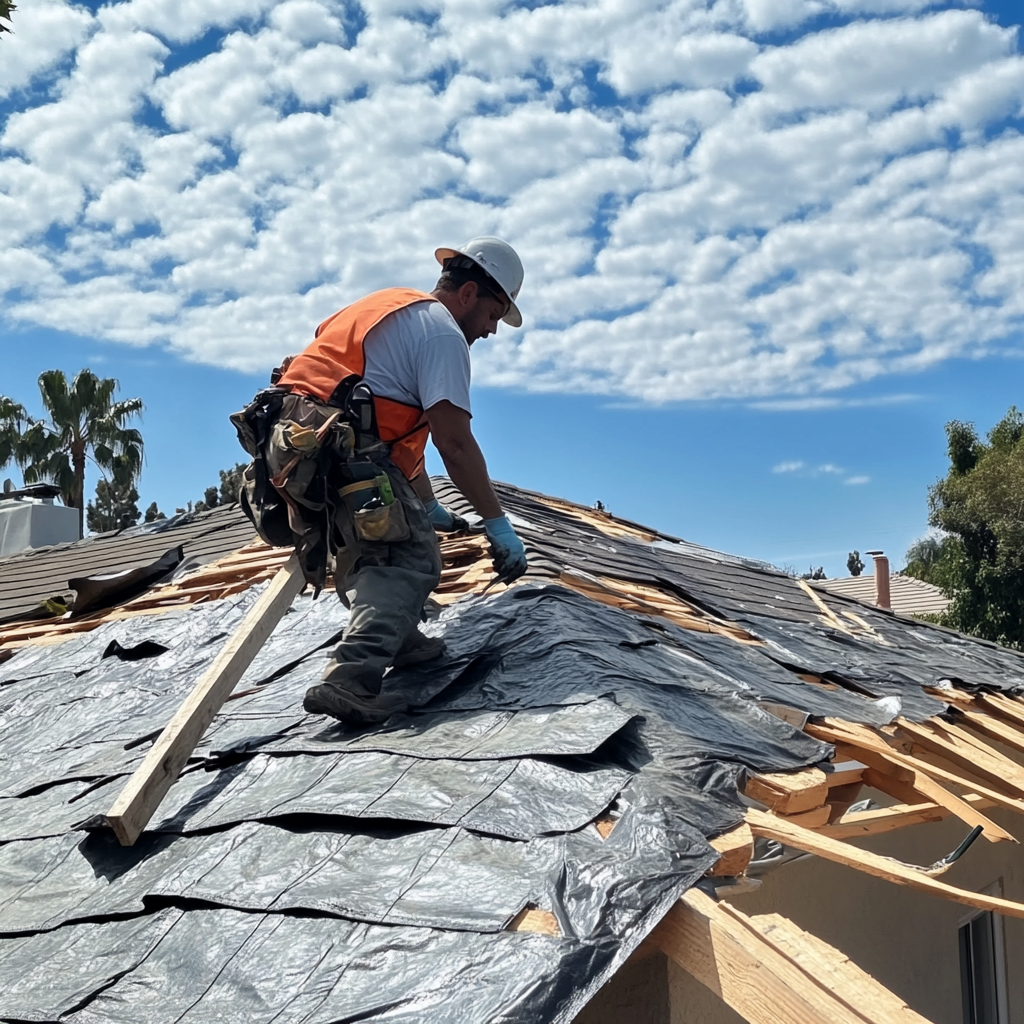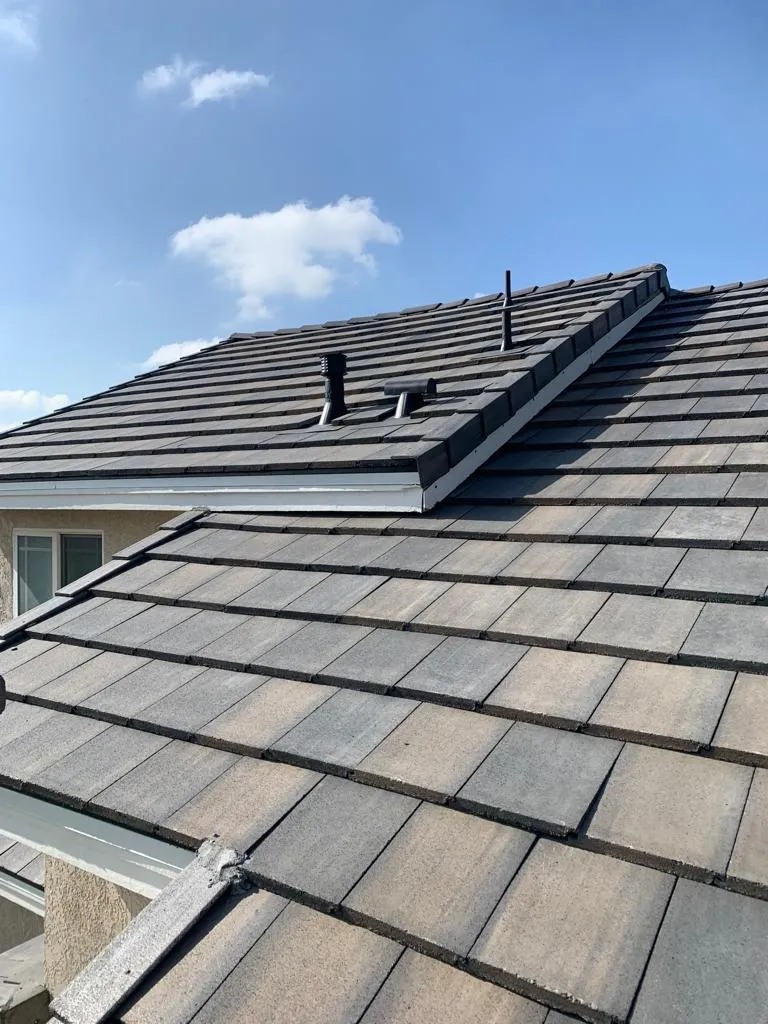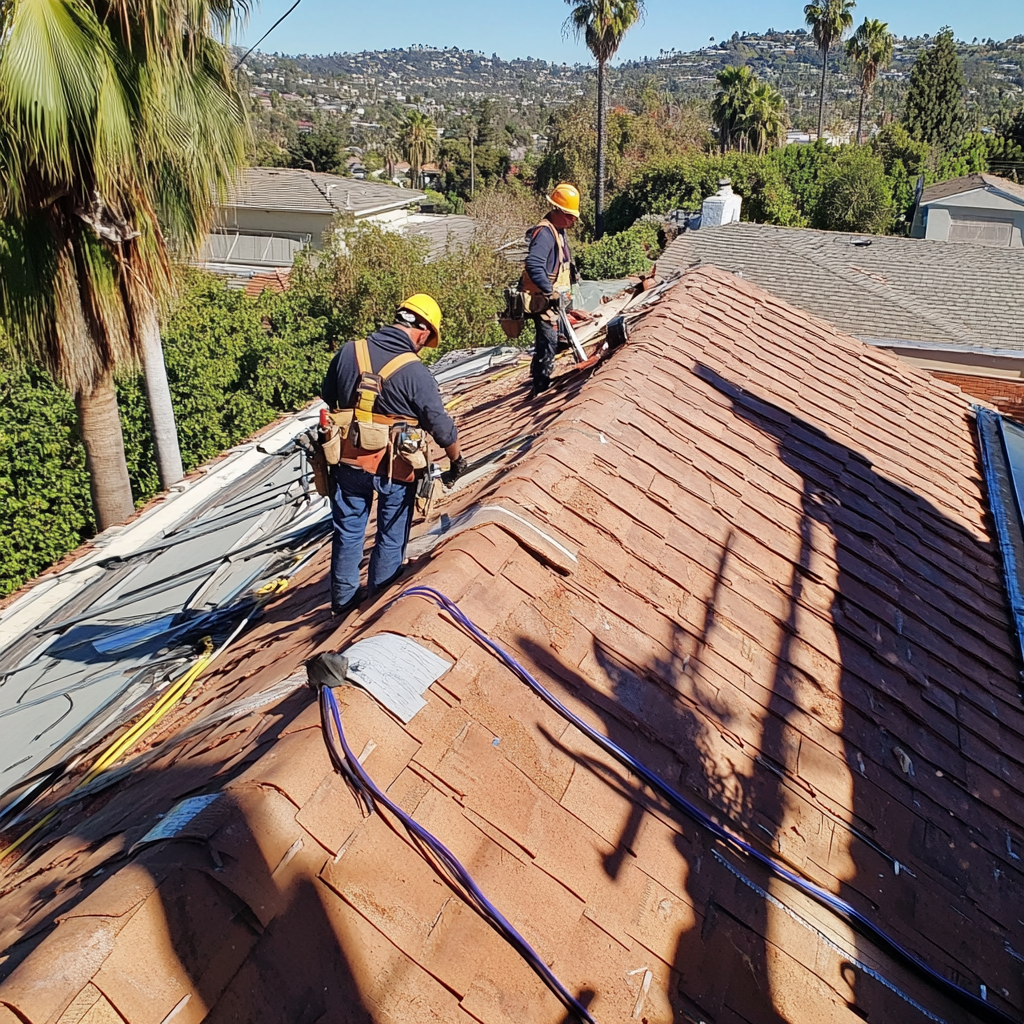
Clay and concrete tile roofs are common throughout Southern California, where homeowners appreciate their appearance, durability, and suitability for a range of architectural styles.
However, even a well-maintained tile roof can develop damaged or broken tiles.
A branch may strike the roof, a tile may crack during maintenance, or older materials may deteriorate after years of exposure.
When homeowners notice broken tiles, they often worry that the entire roof will need to be replaced.
Fortunately, individual roof tiles can often be replaced without replacing the complete roofing system.
The important factors are the condition of the surrounding tiles, availability of compatible materials, integrity of the underlayment, and extent of hidden damage.
For homes in Van Nuys and the San Fernando Valley, understanding how tile roof repairs work can help homeowners recognize when a localized repair may be sufficient.
Why Do Roof Tiles Break?
Roof tiles may crack or break for several reasons.
Physical impact is one possibility.
Falling branches, debris, or improper foot traffic can damage clay and concrete tiles.
Installation problems may also contribute, particularly if tiles are improperly supported or subjected to unusual pressure.
Long-term weather exposure can affect materials, although the severity varies by tile type and installation quality.
A broken tile does not automatically mean the entire roof is failing.
However, repeated damage in the same area deserves investigation.
Can Individual Roof Tiles Be Replaced?
Yes.
When damage is confined to one or a few tiles, professional replacement is often possible.
The contractor must identify the correct tile type and determine how it was originally installed.
Some tile systems use interlocking components, while others rely on overlapping arrangements and specific fastening methods.
Removing a damaged tile without breaking neighboring tiles requires experience and suitable tools.
The Tile Roofing Industry Alliance’s maintenance guidance recommends professional replacement of broken tiles and explains that damaged tiles can expose the underlying roofing layers to water and ultraviolet radiation.
A professional should evaluate the full affected area before completing the repair.
Why Broken Tiles Should Not Be Ignored
Tiles form the visible protective layer of a tile roofing system.
When a tile breaks, it can expose the underlying components to additional weather.
Depending on the design, underlayment may provide an important secondary water barrier.
However, it is not intended to remain unnecessarily exposed.
Prolonged exposure can accelerate deterioration.
A broken tile may also shift or interfere with neighboring pieces.
Repairing damaged tiles promptly can help reduce the risk of secondary problems.
What Is Underneath a Tile Roof?
A tile roof includes more than clay or concrete pieces.
Depending on its design, it may include underlayment, battens, flashings, fastening systems, ventilation components, and roof decking.
These components work together to manage water and support the roof covering.
Even if the tiles appear mostly intact, the underlying materials may deteriorate over time.
This is particularly relevant for older roofs.
A contractor should not assume that replacing the visible broken tile will resolve a problem when the underlayment beneath it is compromised.
Does a Broken Tile Always Cause a Leak?
No.
A tile roof may continue managing water temporarily even when one tile is damaged, depending on the location and condition of the system.
However, the broken tile can increase exposure of vulnerable underlying materials.
The absence of a visible interior leak does not mean the damage is harmless.
Water may enter areas that are difficult to see from inside the house.
Professional evaluation can help determine whether the underlayment or other components need attention.
How Do Roofers Replace a Broken Tile?
The exact process depends on the roofing system.
A qualified roofer generally evaluates how the damaged tile overlaps or connects with surrounding tiles.
The damaged piece is removed in a manner intended to minimize disturbance to adjacent materials.
The contractor then checks the underlying area for damage and installs a compatible replacement using the appropriate fastening or attachment method.
Any disturbed waterproofing details must be restored correctly.
Because tile systems vary, homeowners should avoid relying on one generic repair technique for every roof.
Can New Tiles Match Existing Ones?
Sometimes.
The ability to match a tile depends on its manufacturer, profile, size, material, and color.
Older roofing products may have been discontinued.
Even when compatible tiles are available, color differences may remain because the existing roof has aged.
Some replacement tiles may stand out initially.
If appearance is an important consideration, ask the contractor about matching options before work begins.
The replacement must be compatible with the existing roofing system rather than selected solely for a similar color.
What Happens if the Original Tile Is Discontinued?
Discontinued tile profiles can make repairs more complicated.
A replacement may need to match the original geometry closely enough to maintain proper overlap and drainage.
Using an incompatible tile can create gaps or interfere with neighboring pieces.
A professional may need to research available replacement products or discuss other repair approaches.
The scope of work may increase if suitable materials cannot be sourced.
Homeowners should request a clear explanation of the available options.
What if Several Tiles Are Broken?
Multiple damaged tiles do not automatically require replacing the entire roof.
A localized area may still be repairable if the surrounding roofing components remain sound.
However, widespread damage across different roof sections may indicate a larger problem.
Repeated breakage could involve improper installation, deteriorating materials, or traffic-related damage.
The contractor should evaluate whether replacing individual tiles will produce a durable result.
If the damage is extensive, a larger section may need restoration.
Can Broken Tiles Indicate Underlayment Problems?
Broken tiles and damaged underlayment are different problems, but they can occur together.
If the underlayment has deteriorated, replacing a tile may improve surface coverage without restoring the system’s weather resistance.
A contractor may need to remove additional tiles to inspect and replace damaged underlayment.
This is particularly important when leaks recur despite repeated tile replacement.
The condition of the hidden materials should guide the repair recommendation.
Are Clay and Concrete Tiles Repaired Differently?
Both clay and concrete tiles can often be replaced individually, but their properties and installation systems differ.
Clay tiles may have specific profiles and can be brittle under concentrated loads.
Concrete tiles also vary widely in shape, thickness, and fastening requirements.
Neither material should be treated as universally stronger or easier to repair.
The manufacturer’s specifications and actual condition of the roof determine the proper procedure.
A contractor experienced with Southern California tile roofing systems can identify the appropriate approach.
Why Walking on Tile Roofs Is Risky
Tile roofs can be damaged by improper foot placement.
A homeowner who walks across the roof to inspect one broken tile may accidentally crack several others.
The roof also presents a fall hazard.
Certain tile surfaces may be slippery or difficult to navigate safely.
For these reasons, homeowners should inspect from the ground where possible and leave roof access to qualified professionals.
Photographs from a safe location may help show the location of visible damage.
Should You Repair or Replace the Entire Tile Roof?
Repair may be appropriate when a limited number of tiles are damaged and the underlying system remains in satisfactory condition.
More extensive work may be warranted when underlayment deterioration is widespread, repairs repeatedly fail, or many tiles cannot be reliably replaced.
The age of the roof, compatibility of replacement materials, and condition of flashings should also be considered.
Homeowners can compare roof repair options in Van Nuys with broader roof replacement services when the damage extends beyond individual tiles.
What Should You Ask During an Inspection?
Consider asking:
- How many tiles are damaged?
- What caused the breakage?
- Are matching tiles available?
- Is the underlayment still in good condition?
- Are neighboring tiles cracked?
- Will additional tiles need removal?
- Does the flashing require attention?
- Is a localized repair likely to last?
- What warranty applies to the work?
These questions help separate an isolated tile problem from broader system deterioration.
Final Thoughts
Broken clay or concrete roof tiles can often be replaced without replacing the entire roof.
The key is confirming that the damage is localized and that the underlayment, flashings, and surrounding materials remain suitable.
A proper repair should restore the roofing system without creating new damage to adjacent tiles.
For homeowners in Van Nuys and nearby San Fernando Valley communities, timely tile repairs may help protect the underlying roof assembly.
If you have cracked or missing roof tiles, contact Van Nuys Roof Repair to discuss a professional inspection and potential repair options.