Van Nuys homeowners know summer heat is not just uncomfortable. It is hard on houses, especially roofing systems. Between long stretches of direct sun, high attic temperatures, dry air, and sudden seasonal weather changes, roofs in the San Fernando Valley take a beating year after year. Even when there is no visible storm damage, heat can slowly weaken roofing materials, dry out sealants, crack surfaces, loosen flashing, and shorten the life of the roof.
That is why roof care in Van Nuys needs to be more than a reaction to leaks. By the time water shows up on a ceiling, heat-related damage may have been building for months or even years. Homeowners who understand how local heat affects shingles, tile, flat roofing, underlayment, ventilation, and roof coatings are better prepared to protect their homes before small problems turn into expensive repairs.
For homeowners dealing with cracked materials, roof leaks, or signs of age, Van Nuys Roof Repair provides roofing services focused on the local conditions that affect homes throughout Van Nuys and the surrounding San Fernando Valley.
Why Van Nuys Heat Is So Tough on Roofs
Van Nuys sits in one of the warmer parts of Los Angeles, where summer temperatures can rise quickly and roofs absorb heat for hours at a time. The surface temperature of a roof can become much hotter than the air temperature, especially on dark shingles, older materials, and poorly ventilated roof systems.
This heat exposure creates daily expansion and contraction. During the day, roofing materials expand as they absorb heat. At night, they cool and contract. Over time, that repeated movement puts stress on shingles, tiles, flashing, fasteners, sealants, and seams. Even high-quality roofing materials can wear down faster when they are constantly exposed to intense sunlight and temperature swings.
The issue is not just one hot day. It is the cumulative effect of years of heat. A roof may look fine from the ground while the materials are slowly becoming brittle, warped, loose, or less effective at keeping moisture out.
Asphalt Shingles Can Dry Out, Curl, and Crack
Asphalt shingles are common on many Southern California homes, but they are especially vulnerable to prolonged UV exposure and heat. Shingles are designed with oils and protective granules that help them resist weathering. Over time, intense sun can dry out the asphalt, making the shingles less flexible.
Once shingles lose flexibility, they may start to curl at the edges, crack across the surface, or shed granules into gutters and downspouts. Granule loss is a major warning sign because those granules help protect the shingle from direct sun exposure. Without them, the underlying asphalt ages even faster.
Curled or cracked shingles can also allow wind-driven rain to get underneath the roofing surface. In Van Nuys, where dry months may be followed by sudden rain, damaged shingles can create surprise leaks when the roof is finally tested by weather. If your roof is showing signs of cracked or aging shingles, scheduling a professional inspection through a local roofing company like Van Nuys Roofing Pros can help determine whether repairs are enough or whether larger roof replacement planning is needed.
Tile Roofs Are Not Immune to Heat Damage
Tile roofing is popular in Southern California because it performs well in hot climates and fits the look of many homes in the region. However, tile roofs are not maintenance-free. Clay and concrete tiles can withstand heat better than many materials, but the roof system beneath the tiles still needs attention.
The underlayment below the tile is one of the most important parts of the system. It acts as a secondary barrier against moisture. In hot climates like Van Nuys, underlayment can dry out, become brittle, shrink, or deteriorate over time. When that happens, water can find its way beneath the tiles and into the roof deck.
Heat can also affect the fasteners, mortar, flashing, and sealants around tile roof penetrations. Broken tiles may seem like a minor issue, but they can expose vulnerable areas underneath. A tile roof may still look attractive from the street while the hidden waterproofing layer is nearing the end of its service life.
That is why regular roof inspections matter. Van Nuys homeowners with older tile roofs should not assume that visible tiles tell the whole story. Heat-related underlayment wear is one of the biggest reasons tile roofs eventually need repair.
Flat Roofs Face Extra Heat and Drainage Problems
Flat and low-slope roofs are common on commercial buildings, additions, garages, and some residential properties throughout the San Fernando Valley. These roofs can be especially vulnerable to heat because they absorb direct sun for long periods and often have fewer natural drainage advantages than steep-slope roofs.
When flat roof membranes heat up, they expand. When they cool down, they contract. Over time, this movement can weaken seams, create surface cracks, and pull materials away from edges or penetrations. If the roof also has poor drainage, ponding water can make the problem worse by sitting on already-stressed areas.
Heat can dry out coatings and membranes, while standing water can accelerate deterioration. This combination is one reason flat roof leaks often develop gradually. By the time water enters the building, the roof may already have multiple weak points.
For a deeper look at this issue, Van Nuys homeowners and business owners can read more about why flat roofs leak and how proper diagnosis matters before repairs are made.
Roof Sealants and Flashing Can Break Down
Some of the most vulnerable parts of any roof are the transitions: around chimneys, vents, skylights, walls, roof edges, and HVAC penetrations. These areas often depend on flashing, sealants, and careful waterproofing details to keep moisture out.
Extreme heat can cause sealants to dry, shrink, crack, or separate from the surfaces they are supposed to protect. Once that happens, small gaps can form. Those gaps may not leak immediately during dry weather, but they can allow water intrusion during the first major rain.
Metal flashing can also expand and contract with temperature changes. If flashing was not installed correctly, or if fasteners loosen over time, heat movement can make those weak points worse. This is why roof leaks in Van Nuys often show up around vents, walls, skylights, or roof edges rather than in the middle of an open roof section.
A professional roof inspection can identify these weak points before they become active leaks.
Heat Can Raise Attic Temperatures and Stress the Whole Roof System
Your roof is not just the material you see from the outside. It is a system that includes decking, underlayment, ventilation, insulation, flashing, and attic airflow. When San Fernando Valley heat builds up in the attic, it can affect the roof from underneath as well as above.
Poor attic ventilation traps hot air inside the home’s upper structure. That heat can bake the underside of the roof deck, accelerate material wear, and make the home harder to cool. In some cases, poor ventilation can contribute to moisture problems as well, especially when warm air and trapped humidity interact.
A well-ventilated roof system helps reduce heat buildup, supports roofing material performance, and can improve indoor comfort. Homeowners looking into better heat performance may also want to explore energy-efficient roofing options for summer, especially if their current roof absorbs too much heat.
UV Exposure Weakens Roofing Materials Over Time
In Van Nuys, the sun is one of the biggest long-term threats to a roof. Ultraviolet rays break down roofing materials at the chemical level. This process is gradual, but the effects become visible over time: faded surfaces, brittle shingles, cracked membranes, dry underlayment, and weakened coatings.
UV damage is especially important on older roofs. A roof that has already lost some of its protective surface may deteriorate faster once direct sunlight reaches deeper layers. This is why delaying small repairs can be costly. A few damaged shingles, cracked tiles, or worn sealant areas can expose more vulnerable parts of the roof to ongoing sunlight.
If a roof has been exposed to decades of Van Nuys heat, homeowners may need to consider whether repairs will provide enough protection or whether replacement is the smarter long-term option. Van Nuys Roofing Pros has also covered guidance on how often Southern California homeowners should replace their roof, which can help homeowners think through timing.
Heat Damage Can Make Rain Leaks Worse
One of the tricky things about heat damage is that it often happens during dry weather, but the consequences appear during rain. A roof may spend months drying out, cracking, shifting, or weakening under the sun. Then, when rain finally arrives, water finds every gap.
This is why preparing your roof before the rainy season is so important in Van Nuys. The best time to fix heat-related roof damage is before the first storm, not during it. Loose flashing, brittle shingles, deteriorated underlayment, and cracked flat roof membranes are easier to address when the roof is dry and conditions are safer.
A seasonal inspection can help homeowners spot damage caused by summer heat before winter rain exposes it. For more preventive guidance, Van Nuys homeowners can review this homeowner guide on how to prepare your roof for storm season.
Dark Roofing Materials Can Make Heat Problems Worse
Roof color and material choice matter in hot areas. Darker materials absorb more heat, while lighter or reflective roofing materials can help reduce surface temperatures. This does not mean every home needs the same type of roof, but homeowners in Van Nuys should think carefully about heat performance when repairing or replacing roofing materials.
Cool roofing products, reflective coatings, tile, metal, and other heat-conscious options may help reduce heat absorption depending on the home’s structure and roofing needs. The right choice depends on roof slope, budget, appearance, durability goals, and local building requirements.
If your current roof makes your home feel hotter or your energy bills climb during summer, it may be worth reviewing the best roofing materials for hot climates before making repair or replacement decisions.
Warning Signs of Heat-Damaged Roofing
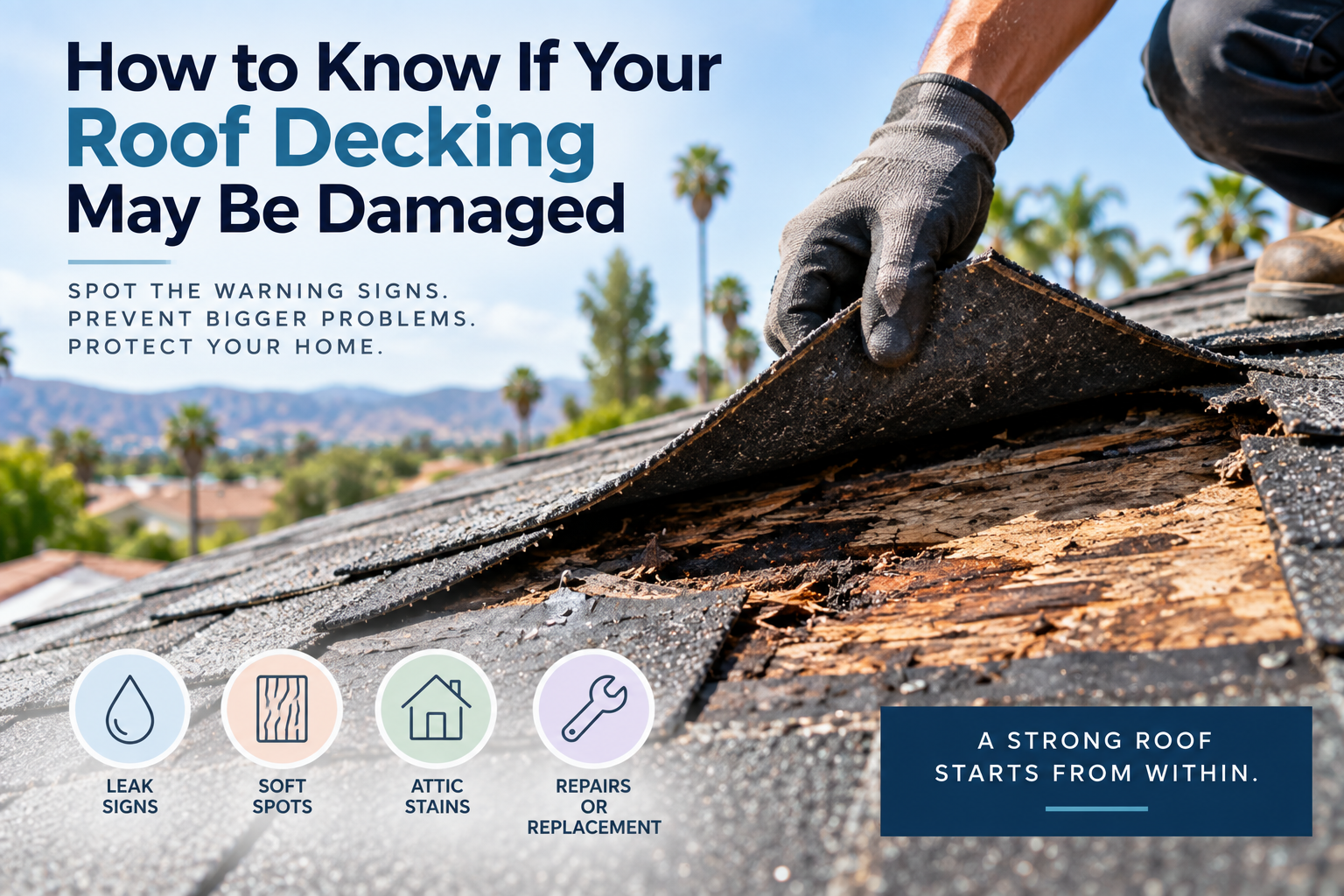
Heat damage is not always obvious from the ground, but there are several warning signs Van Nuys homeowners should watch for. These include curling shingles, cracked shingles, missing granules, faded or brittle roofing materials, broken tiles, cracked sealant, loose flashing, blistering on flat roofs, ponding water, sagging roof areas, and new indoor stains after rain.
Higher indoor temperatures can also be a clue. If your home feels harder to cool than it used to, your attic ventilation or roofing materials may not be performing well. While HVAC problems can also cause comfort issues, the roof should not be ignored.
Homeowners should also pay attention after heat waves. Extended high temperatures can push older roofing systems closer to failure. A roof that was already worn may develop new cracks, lifted edges, or separation around vulnerable areas after prolonged heat exposure.
When Roof Repair Is Enough
Not every heat-damaged roof needs to be replaced. In many cases, targeted roof repair can extend the life of the system. Small areas of damaged shingles, isolated flashing problems, cracked sealants, minor tile damage, or limited flat roof issues may be repairable if the rest of the roof is still in good condition.
The key is proper diagnosis. A quick patch may stop a visible leak temporarily, but it may not solve the underlying heat-related damage. For example, sealing one crack on a flat roof will not help if the membrane is aging across a larger area. Replacing a few broken tiles may not solve the problem if the underlayment below them has deteriorated.
That is why homeowners should work with a roofer who understands how Van Nuys heat affects different roofing systems and can explain whether the damage is isolated or part of a larger pattern.
When Heat Damage Points Toward Replacement
Roof replacement may be the better option when heat damage is widespread, the roof is near the end of its expected lifespan, leaks keep returning, or the roofing system has multiple failing components. If shingles are curling across large sections, tile underlayment is badly deteriorated, or a flat roof membrane is cracking throughout, repairs may only delay the inevitable.
Replacement can also be an opportunity to choose materials better suited for Van Nuys heat. Homeowners may consider more reflective roofing, improved ventilation, upgraded underlayment, better flashing details, or materials designed for stronger long-term performance in hot climates.
In some cases, replacing an aging roof can also improve protection against other risks, including fire exposure. Van Nuys Roofing Pros has written about how a new roof can better protect your home against fire, which is especially relevant for Southern California homeowners thinking beyond basic leak prevention.
Protect Your Van Nuys Roof Before Heat Damage Gets Worse
San Fernando Valley heat is not something homeowners can avoid, but roof damage from heat can often be managed with the right maintenance, repairs, and material choices. The most important step is to be proactive. Waiting until water enters the home usually means the roof has already been weakened by months or years of sun exposure.
A professional inspection can identify cracked materials, worn sealants, ventilation concerns, flat roof problems, tile underlayment issues, and early leak risks before they become emergencies. Whether your home has asphalt shingles, tile roofing, a flat roof section, or an aging roof system, heat should be part of the conversation.
For homeowners in Van Nuys who want to protect their property from heat-related roof damage, contact Van Nuys Roofing Pros to schedule an inspection, discuss repair options, and get honest guidance before the next heat wave or rainstorm puts your roof to the test.