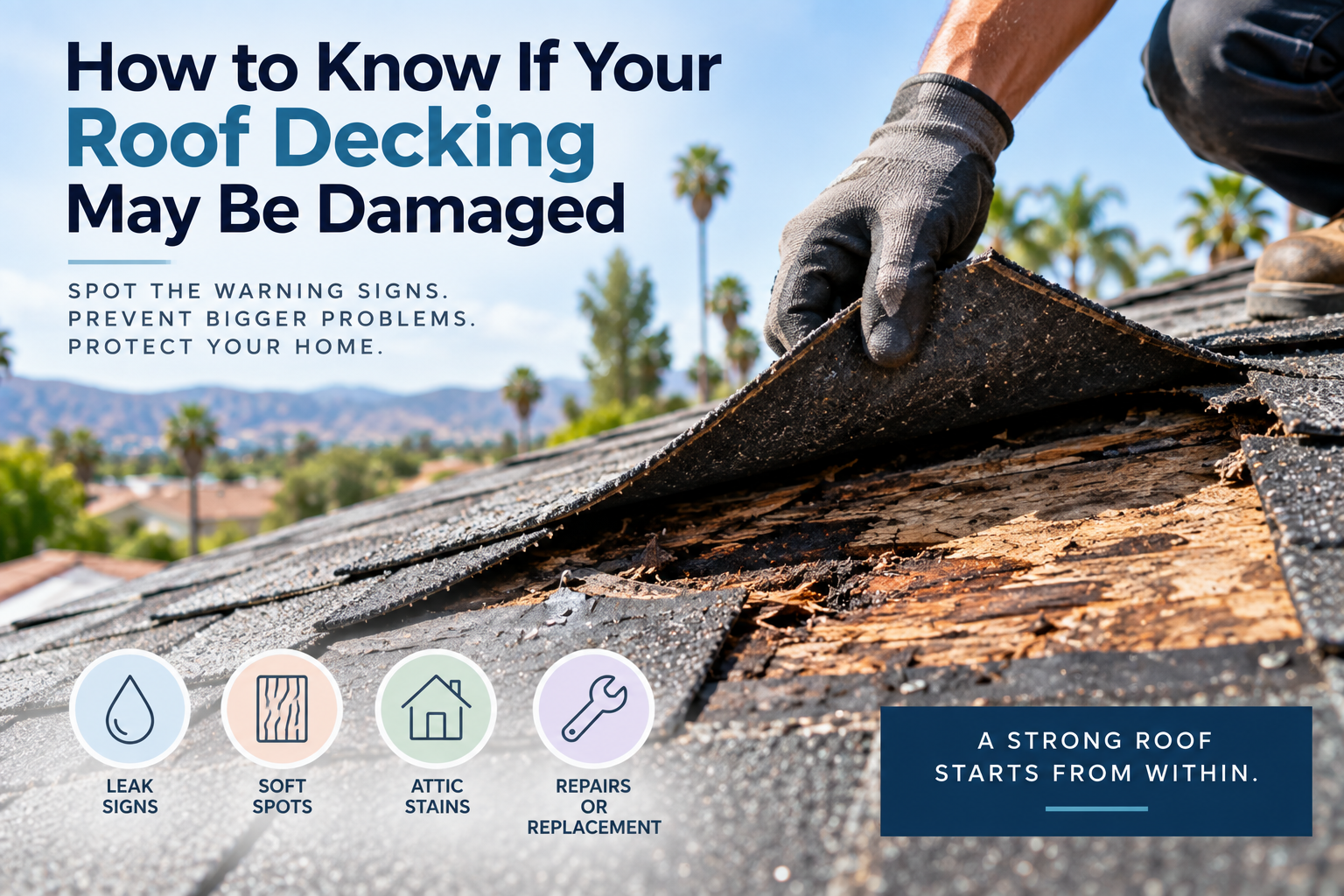
When homeowners think about roof damage, they usually picture missing shingles, cracked tiles, ceiling stains, or water dripping into a room. But before roof damage reaches the ceiling, it often affects another part of the home first: the attic.
Your attic sits directly beneath the roof system, which makes it one of the first areas where hidden roof problems may show up. A small leak, damaged underlayment, loose flashing, poor drainage, cracked roofing material, or wind-related roof damage can allow moisture into the attic long before it becomes obvious inside the living space.
For Van Nuys homeowners, attic damage can be especially easy to overlook because the space is not used every day. You may not notice damp insulation, musty odors, water stains, rusted nails, or roof deck damage until the issue has already been present for a while. That is why roof damage should never be treated as only an exterior problem.
If you suspect your roof is letting moisture into your attic, scheduling roof repair in Van Nuys can help identify the source before the damage spreads into ceilings, walls, insulation, or interior finishes.
Why the Attic Is Vulnerable to Roof Damage
The attic is directly connected to the health of your roof. Above the attic are the roof deck, underlayment, flashing, shingles, tiles, vents, and other roofing components that help keep water out. When one of those parts fails, the attic may be the first place moisture appears.
A roof leak does not always drip straight into a room. Water can enter through a damaged area, travel along rafters or roof decking, soak into insulation, and slowly work its way down. By the time you see a ceiling stain, the attic may already have been affected.
This is why attic checks can be useful after storms, strong wind, heavy heat exposure, or visible roof damage. The attic can reveal early signs that the roof is no longer protecting the home properly.
Van Nuys Roof Repair’s article on what to do when you notice a ceiling water stain explains why interior stains should be traced back to the moisture source instead of covered up too quickly.
Damp Insulation Is a Major Warning Sign
One of the most common ways roof damage affects the attic is by soaking the insulation. Attic insulation is supposed to help regulate indoor temperatures, but when it gets wet, it can become less effective and harder to dry.
Wet insulation may look darker, flattened, clumped, compressed, or stained. It may also feel damp if touched, though homeowners should avoid handling insulation without proper protection. Damp insulation can hold moisture against nearby materials, which may increase the risk of odor, staining, and deterioration.
Even if the ceiling below looks normal, wet attic insulation can signal an active or recent leak. The moisture may be coming from damaged roofing materials, failing underlayment, loose flashing, roof penetrations, or drainage problems.
If you notice damp insulation after rain, it is a good reason to schedule a professional roof inspection.
Roof Leaks Can Stain the Roof Deck
The roof deck is the wood surface beneath the roofing materials. When water gets past the outer layers of the roof, it may stain or darken the underside of the roof deck inside the attic.
From a safe attic access point, you may see dark streaks, discolored patches, water trails, or areas that look different from the surrounding wood. In some cases, stains may appear around nails, vents, valleys, chimneys, skylights, or roof edges.
These stains can help point to where water has traveled, but they do not always reveal the exact entry point. Water may enter in one location and move before it becomes visible. That is why roof leak tracing often requires professional evaluation from both the exterior roof surface and interior attic area.
If your roof looks fine from the ground but attic stains are present, hidden roof damage may still be involved.
Attic Moisture Can Create Musty Odors
A musty smell in the attic or upper rooms can be a sign that moisture is trapped somewhere. The odor may be more noticeable after rain, during warm weather, or when attic air moves into the living space.
A musty odor does not always mean the roof is leaking. It can also come from ventilation issues, plumbing, HVAC condensation, or other moisture sources. But if the smell appears near the attic or upper ceiling areas, roof damage should be considered.
Moisture that sits in insulation, wood, or enclosed attic spaces can create persistent odors. If the issue is not addressed, the smell may spread or become more noticeable over time.
Van Nuys Roof Repair’s guide on why small roof leaks can become expensive repairs explains how hidden moisture can create larger repair concerns when leaks are ignored.
Roof Damage Can Reduce Energy Efficiency
A damaged roof can affect attic conditions, and attic conditions can affect how hard your home’s cooling system has to work. If insulation becomes wet, compressed, or damaged, it may not perform as well. If roof damage allows excess heat or moisture into the attic, the home may become less comfortable.
In Van Nuys, where summer heat can be intense, attic performance matters. A roof that is damaged, poorly ventilated, or allowing moisture into the attic can contribute to uneven indoor temperatures and higher cooling strain.
Roof damage is not the only reason a home may have energy issues, but it can be part of the problem. If you have noticed rising energy costs along with roof wear, attic moisture, or visible roof damage, the roof should be evaluated.
Van Nuys Roof Repair covers related concerns in can a damaged roof increase energy costs.
Failing Underlayment Can Affect the Attic
Roof underlayment is the protective layer beneath the visible roofing material. When underlayment fails, moisture may reach the roof deck and attic even if the visible roof surface does not look severely damaged.
This is especially important for tile roofs. Tiles can look durable from the ground, but the underlayment beneath them may age, crack, dry out, or lose effectiveness over time. Once the underlayment is compromised, water may enter the attic during rain or wind-driven weather.
Warning signs may include recurring leaks, ceiling stains, attic moisture, damp insulation, or leaks that appear even though the tiles look mostly intact.
Van Nuys Roof Repair explains this hidden issue in more detail in warning signs your roof underlayment may be failing.
Wind Damage Can Lead to Attic Problems
Wind can damage a roof even without heavy rain. Strong gusts may lift shingles, shift tiles, loosen flashing, damage roof edges, or move debris across the roof. Those weaknesses may not leak immediately, but they can leave the attic vulnerable when the next rain arrives.
For example, a lifted shingle may allow water to enter later. A shifted tile may expose underlayment. Loose flashing may create a gap near a wall or vent. Wind-blown debris may crack tiles or block drainage paths.
The attic may show the first signs of these problems. You may notice damp insulation, staining on roof decking, or moisture trails after a later storm.
Van Nuys Roof Repair’s article on how wind can damage a roof even without heavy rain explains why wind-related roof concerns should be inspected before the next rain tests the roof.
Attic Ventilation Issues Can Make Damage Worse
Roof damage and attic ventilation problems can sometimes overlap. If an attic does not ventilate properly, heat and moisture may build up inside. That can make roofing materials age faster, contribute to condensation, and create uncomfortable indoor conditions.
If roof damage is already allowing moisture into the attic, poor ventilation may make drying more difficult. Moisture that lingers can affect insulation, wood surfaces, and air quality inside the attic.
Signs of ventilation or moisture concerns may include musty odors, excessive attic heat, rusted nails, damp insulation, condensation, or uneven indoor temperatures.
A roofing professional can help determine whether the problem is primarily roof damage, ventilation-related, or a combination of both.
Roof Damage Can Affect Stored Belongings
Many homeowners use the attic for storage. Boxes, holiday decorations, documents, clothing, furniture, and keepsakes may sit directly below roof areas that are vulnerable to leaks.
If roof damage allows moisture into the attic, stored items may be affected before the homeowner notices damage inside the living space. Cardboard boxes may soften, fabrics may smell musty, and personal items may become stained or warped.
If you store belongings in the attic, check them periodically, especially after rain or strong winds. Move valuables away from areas under roof penetrations, valleys, or known leak-prone sections.
If you discover damaged belongings, document the area and look above the affected spot for signs of roof or attic moisture.
Watch for Rusted Nails or Metal Components
In some attics, moisture may show up as rust on nails, fasteners, vent components, or metal hardware. Rust can indicate that moisture has been present in the attic environment.
Not all rust automatically means an active roof leak, but it is a sign worth investigating. Condensation, ventilation issues, or roof leaks can all contribute to moisture around metal components.
If rust appears along with damp insulation, water staining, musty odors, or ceiling stains, there may be a larger moisture problem connected to the roof system.
A professional inspection can help determine whether the moisture is coming from outside through the roof or forming inside due to ventilation and temperature conditions.
Do Not Walk Through the Attic Without Caution
If you suspect attic damage, safety matters. Attics can be hazardous. There may be exposed nails, loose insulation, electrical wiring, low clearance, extreme heat, and areas that cannot support weight. Stepping in the wrong place can damage the ceiling or cause injury.
If you can safely look from the attic access point with a flashlight, that may provide useful clues. But you should not walk through the attic unless you know where it is safe to step and have proper protective gear.
You also should not disturb insulation unnecessarily. Insulation can irritate skin, eyes, and lungs. If you see signs of moisture but are not sure how to inspect further, call a professional.
A roofing contractor can evaluate attic signs and compare them with exterior roof conditions.
When Attic Damage Means the Roof Needs Repair
Not every attic issue comes from the roof, but roof repair may be needed when moisture appears after rain, attic stains line up with roof penetrations, insulation is wet beneath damaged roofing areas, or exterior roof damage is visible.
Roof repair may involve replacing damaged shingles or tiles, repairing flashing, sealing roof penetrations, correcting drainage problems, addressing wind damage, or repairing areas where underlayment has been compromised.
If the roof is older, has repeated leaks, or has widespread hidden damage, repair may not always be enough. In some cases, roof replacement in Van Nuys may be the more practical long-term option.
The right recommendation depends on the age of the roof, type of roofing system, damage extent, attic findings, and whether the issue is isolated or widespread.
Schedule an Inspection Before Interior Damage Spreads
Attic damage can be an early warning sign. If you catch it before water reaches ceilings, walls, flooring, or electrical fixtures, you may be able to limit the scope of repairs.
Do not wait until the next storm makes the problem obvious. If you notice attic moisture, musty odors, wet insulation, roof deck stains, or signs of roof damage from the ground, schedule an inspection.
Van Nuys Roof Repair can inspect roof surfaces, flashing, penetrations, drainage areas, and attic-related warning signs to help determine the source of the problem. To get started, contact Van Nuys Roof Repair and schedule an evaluation.
Final Thoughts
Roof damage can absolutely affect your attic. In fact, the attic is often one of the first places where hidden roof problems appear. Damp insulation, roof deck stains, musty odors, rusted nails, stored item damage, and moisture after rain can all point to a roofing issue.
For Van Nuys homeowners, attic problems should not be ignored. Heat, wind, aging materials, seasonal rain, and underlayment wear can all contribute to roof-related moisture issues. The sooner you investigate, the easier it may be to prevent ceiling stains, interior damage, and more expensive repairs.
If you suspect your roof is affecting your attic, Van Nuys Roof Repair can help identify the source and recommend the right repair path.