When you notice roof damage, one of the first questions is usually, “Did this just happen, or has it been there for a while?” The answer matters. Recent roof damage may be connected to wind, heat, falling debris, heavy rain, or a sudden leak. Older roof damage may point to long-term wear, poor maintenance, aging materials, underlayment issues, or a repair that was delayed too long.
Knowing whether roof damage is old or recent can also matter for repair planning, insurance conversations, home sales, and preventing further damage. A fresh issue may only need a targeted repair if it is caught early. Older damage may have already affected the attic, decking, insulation, drywall, or surrounding roofing materials.
For homeowners in Van Nuys and the San Fernando Valley, roof damage can be hard to date because the weather is often dry for long stretches. Heat and sun can weaken roofing materials quietly, and the damage may not become obvious until wind or rain exposes it. That is why a professional inspection from Van Nuys Roof Repair can help determine what happened, how serious it is, and what repair makes sense.
Why It Matters Whether Roof Damage Is Old or Recent
Old and recent roof damage can require different responses. Recent damage may involve a lifted shingle, cracked tile, puncture, loose flashing, or storm-related issue that should be repaired before water gets inside. Older damage may have had time to spread, causing hidden moisture, rotten decking, attic stains, or interior ceiling damage.
The timing can also affect documentation. If the damage appears after a wind event, heat wave, falling branch, or rainstorm, you may want photos, dates, and inspection notes. If you are selling a home, buyers may ask whether roof problems are new or long-standing. If you are buying a home, the condition of the roof may influence negotiations.
Van Nuys Roof Repair’s article on why roof repairs should be handled before listing a home for sale explains why roof condition can matter during a sale.
Fresh Breaks Often Look Cleaner
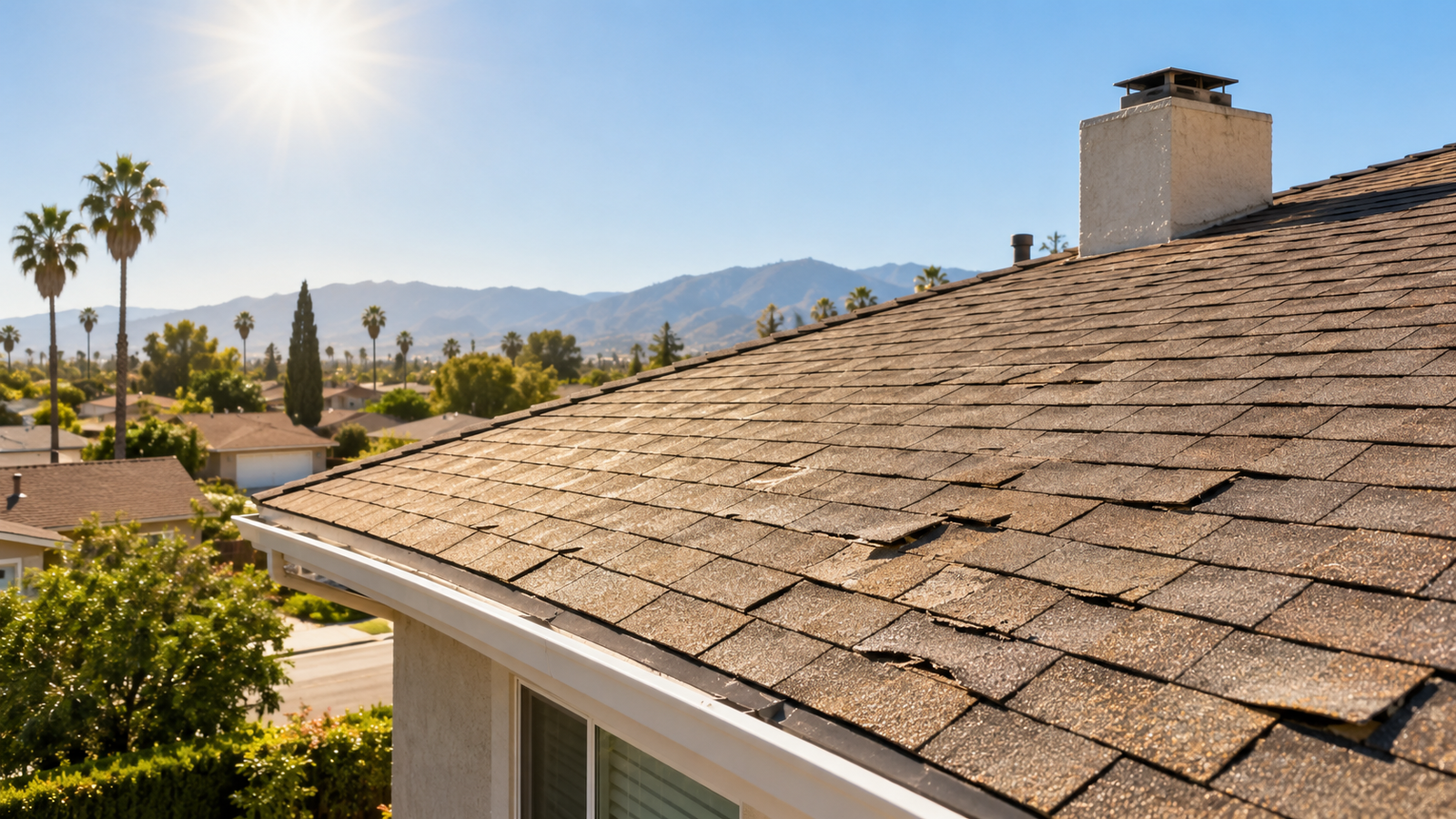
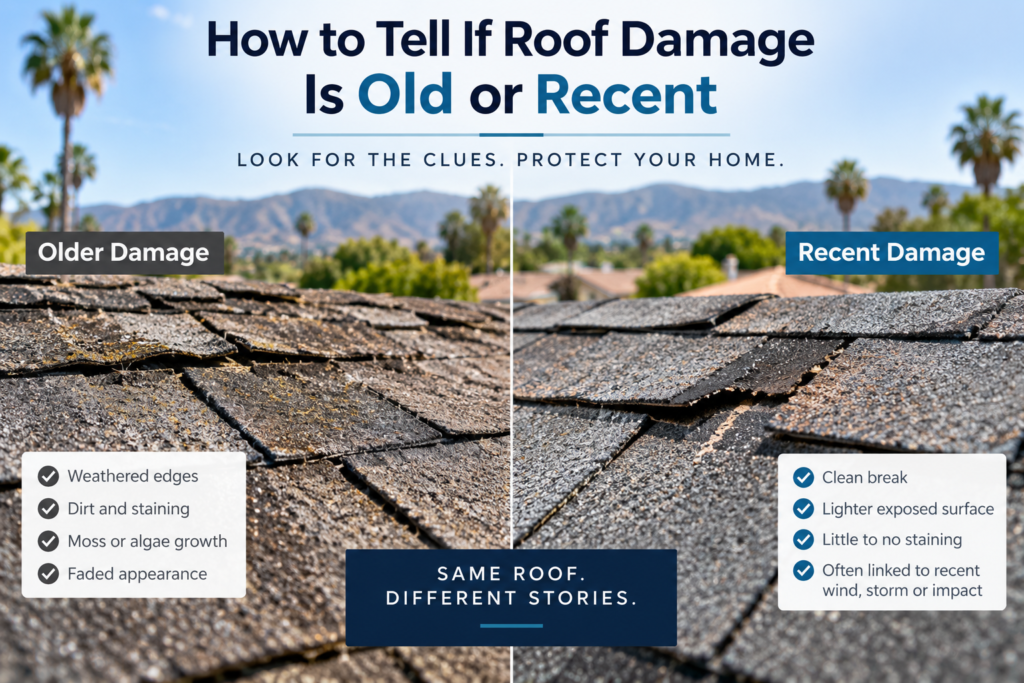
One clue that roof damage may be recent is a clean-looking break. If a shingle, tile, or roof component has recently cracked, the exposed material may look lighter, sharper, or less weathered than the surrounding surface.
Older cracks often look dirtier, darker, sun-baked, or more worn around the edges. They may collect dust, debris, algae, or stains. Recent breaks may have sharper edges and less discoloration.
This is not always easy to see from the ground, and homeowners should not climb onto the roof to check. But if you notice a newly exposed area, a bright crack, or fresh debris around the home after wind or impact, the damage may be recent.
Van Nuys Roof Repair’s article on how to spot roof damage from the ground can help you safely look for visible warning signs without getting on the roof.
Older Damage Often Has Staining or Dirt Around It
Old roof damage usually shows signs of exposure. A cracked area, missing piece, or lifted edge that has been open for a while may collect dirt, dust, dried leaves, granules, or staining.
Around old leaks, you may also see water marks, dark streaks, deteriorated sealant, rusted flashing, or discoloration on nearby materials. In the attic, older leaks may leave brown stains on wood, damp-looking insulation, or musty odors.
Recent damage may not have had enough time to stain surrounding materials yet. If a leak appears suddenly but the attic has dark staining, moldy odors, or damaged insulation, the roof problem may have existed before the water became visible inside.
Van Nuys Roof Repair’s guide on can roof damage affect your attic explains why attic clues can help reveal how long moisture may have been present.
Recent Wind Damage May Leave Lifted or Missing Materials
Wind can lift shingles, loosen flashing, shift roof edges, or damage vulnerable areas. After a strong wind event, look from the ground for missing shingles, raised edges, exposed underlayment, or pieces of roofing material in the yard.
Recent wind damage often appears suddenly. You may notice it after hearing wind overnight, seeing debris on the property, or finding a new leak after the next rain. If roofing materials are still nearby, that can also suggest the damage happened recently.
Older wind damage may look more weathered. A lifted shingle that has been exposed for months may be curled, brittle, dirty, or cracked from sun exposure. The underlayment beneath it may also show wear.
Van Nuys Roof Repair’s article on how wind can damage a roof even without heavy rain explains why wind-related roof issues should be checked even when there was no major storm.
Heat Damage Can Make Timing Harder
In Van Nuys, heat can make roof damage harder to date. Heat-related wear often develops gradually. Shingles may curl, crack, lose granules, or become brittle over time. Sealants may dry out slowly. Underlayment may weaken beneath damaged roofing materials.
After a heat wave, homeowners may notice damage that seems new, even though the roof had been weakening for months or years. A cracked shingle may finally split. A sealant joint may finally open. A roof edge may lift after repeated expansion and contraction.
This is why heat damage often requires a closer inspection. A professional can look for signs of long-term wear versus sudden failure.
Van Nuys Roof Repair’s article on how to know if your roof needs repair after a heat wave explains what to check after extreme temperatures.
Granule Loss Can Show Whether Wear Is Ongoing
Granule loss can help reveal whether roof damage is part of long-term aging or a more recent event. Asphalt shingles naturally lose some granules over time. Heavy, widespread granule loss often suggests older wear, heat exposure, age, or material deterioration.
Recent granule loss may appear as fresh piles in gutters, downspouts, or around the home after wind, foot traffic, or roof disturbance. If shingles suddenly look patchy or bald after a specific event, the damage may be newer.
Older granule loss tends to look more widespread and uneven across the roof. Shingles may appear faded, shiny, or thin. Once granules are gone, the shingle is more vulnerable to UV damage and cracking.
Van Nuys Roof Repair’s article on what causes granule loss on asphalt shingles explains why this issue matters for roof performance.
Ceiling Stains Can Offer Clues
Interior ceiling stains can help indicate whether a leak is new or has been happening for a while. A fresh stain may look damp, light brown, or have a soft edge. An older stain may be darker, dry, ringed, or layered from repeated leaks.
If the stain grows after each rain, the leak is still active. If the stain appears suddenly but has dark rings or old discoloration, water may have entered before without being noticed.
However, ceiling stains do not always appear right away. Water can travel through the attic, insulation, and framing before reaching drywall. That means a “new” stain may be the result of an older roof problem.
Van Nuys Roof Repair’s article on what to do when you notice a ceiling water stain explains why stains should be evaluated instead of covered with paint.
Older Leaks May Have Attic or Insulation Damage
If a roof leak has been present for a while, the attic may show more evidence than the ceiling. Look for dark stains on roof decking, damp insulation, compressed insulation, musty smells, rusted nails, or water trails along rafters.
A recent leak may show fresh dampness but limited staining. Older leaks may show dried stains, repeated water marks, wood discoloration, or insulation that looks matted and dirty.
Attic evidence can be especially important in dry climates because leaks may only show up during occasional rain. A roof may leak during one storm, dry out, and then leak again months later. By the time a homeowner notices interior damage, the problem may no longer be new.
Cracked Sealant May Point to Age
Roof sealants are used around certain vents, penetrations, flashing, and repair areas. Over time, heat and UV exposure can cause sealant to dry, shrink, crack, or pull away.
If the sealant looks brittle, chalky, cracked, or separated, the damage may be older or related to long-term heat exposure. Fresh sealant failure may look like a clean separation, but older sealant often looks dry and weathered.
Sealant should not be the only defense against leaks, but failed sealant can create openings around roof penetrations. In Van Nuys heat, this is a common area to watch.
If a leak appears near a vent, skylight, wall, or roof penetration, the issue may be related to flashing or sealant failure.
Damaged Underlayment May Suggest Long-Term Exposure
Underlayment sits beneath the visible roofing material and helps provide a secondary layer of protection. Homeowners usually cannot see underlayment unless shingles or tiles are missing, lifted, or damaged.
If underlayment is exposed and looks torn, brittle, curled, sun-damaged, or deteriorated, the roof damage may not be brand new. Underlayment that has been exposed to sun, wind, and weather can break down over time.
Recent damage may expose underlayment that still looks more intact. Older damage may show dry, cracked, or worn underlayment that no longer protects as intended.
Van Nuys Roof Repair’s article on warning signs your roof underlayment may be failing explains why underlayment problems can be serious even when the top layer of the roof does not look terrible.
Roof Decking Damage Usually Means Water Has Been There
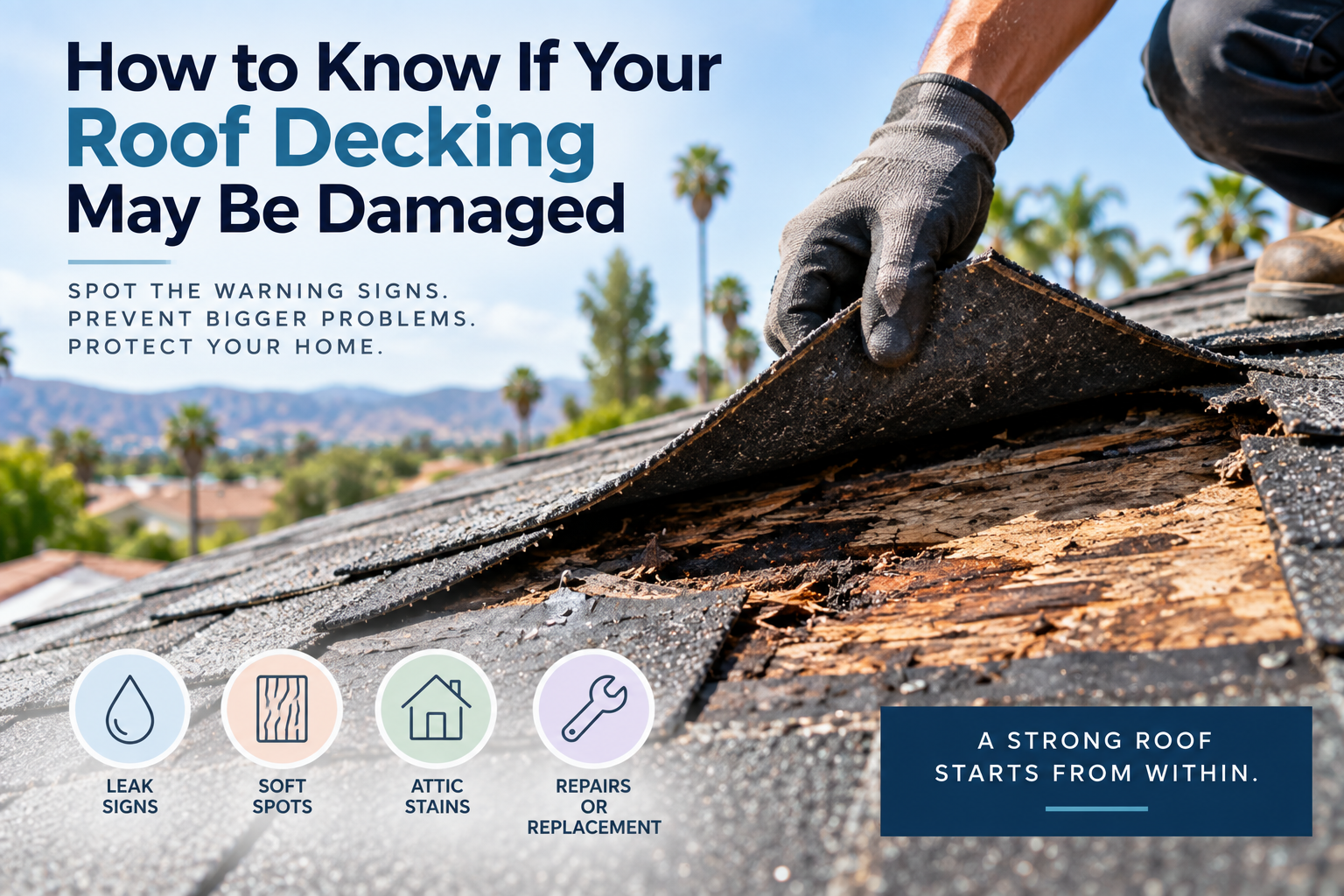
Roof decking is the wood or structural surface beneath the roofing materials. If decking is soft, sagging, rotted, or stained, the problem may have been developing for a while.
Recent roof damage can expose decking to water, but decking typically does not rot overnight. Soft spots, sagging, or deterioration often suggest repeated moisture or long-term leakage.
Homeowners should never walk on a roof that may have soft spots. Damaged decking can be unsafe. A professional can inspect the roof and attic to determine whether decking repairs are needed.
If damage is limited, roof repair may be possible. If decking damage is widespread or the roof is older, roof replacement in Van Nuys may need to be considered.
Repair Patches Can Reveal Past Problems
Old repair patches can help identify areas that have had trouble before. Look for mismatched shingles, different colored tiles, excess sealant, patched flashing, or uneven roof sections.
A previous repair is not automatically bad. Many roof repairs are effective when done properly. But if damage appears near an old patch, it may mean the repair has aged, failed, or did not address the full problem.
If you bought the home recently and do not know the roof history, old patch areas are worth inspecting. They may reveal where leaks or damage happened before.
Van Nuys Roof Repair’s article on what questions should you ask before hiring a roof repair company is useful if you need help evaluating repair quality and next steps.
Recent Impact Damage May Leave Debris
If damage was caused by a falling branch, windblown object, satellite dish movement, or construction activity, there may be debris nearby. Recent impact damage may leave broken tile pieces, shingle fragments, dented metal, scraped surfaces, or loose parts.
Older impact damage may be harder to connect to a specific event. The damaged area may be weathered, stained, or covered with debris. If the roof was already aging, impact damage can also spread beyond the obvious point of contact.
If you notice broken pieces after a windy day or yard work, take photos before moving debris. Documentation can help a roofing professional understand what happened.
Timing With Weather Events Can Help
Think about when you first noticed the damage. Was it after a heat wave, wind event, rainstorm, or nearby tree branch falling? Did the ceiling stain appear after the first rain in months? Did you notice roof pieces in the yard after strong winds?
Damage that appears immediately after a specific event may be recent, but that does not mean the roof was healthy before. A storm or heat wave can expose an older weakness.
Document dates, weather conditions, photos, and symptoms. This can help during inspection and may be useful if insurance or a real estate transaction is involved.
Why a Professional Inspection Matters
Even with these clues, it can be difficult to tell exactly when roof damage happened. Roofing materials weather at different rates. Heat can make new damage look older quickly. Old leaks can appear indoors suddenly. Water can travel far from the original opening.
A professional roof inspection can compare the visible damage, surrounding roof condition, attic evidence, material age, repair history, and possible weather exposure. The goal is not only to date the damage. It is to determine whether the roof needs repair, replacement, or monitoring.
For small, localized damage, roof repair in Van Nuys may be enough. For widespread aging, repeated leaks, underlayment failure, or decking damage, replacement may be the better long-term option.
What to Do If You Are Not Sure
If you are unsure whether damage is old or recent, start by documenting everything. Take photos from the ground, note when you first noticed the issue, check interior ceilings, look for attic signs if safe, and avoid walking on the roof.
Then schedule an inspection with Van Nuys Roof Repair. Waiting can allow water, heat, and wind to make the damage worse.
Do not assume old damage is harmless just because it has been there for a while. And do not assume recent damage is minor just because it looks small. The seriousness depends on what the roof system looks like beneath the surface.
Final Thoughts
Telling whether roof damage is old or recent requires looking at the whole picture. Fresh breaks, recent debris, sudden missing materials, and new leaks after wind or rain may point to recent damage. Dirt, staining, brittle sealant, weathered cracks, attic discoloration, insulation damage, old patches, or soft decking may suggest older problems.
In Van Nuys, heat and long dry stretches can make timing harder. A roof may weaken slowly, then show symptoms suddenly when wind or rain arrives.
If you notice roof damage and are not sure how long it has been there, schedule a professional inspection. Understanding the age and severity of the damage can help you choose the right repair plan, protect your home, and avoid larger roofing problems later.