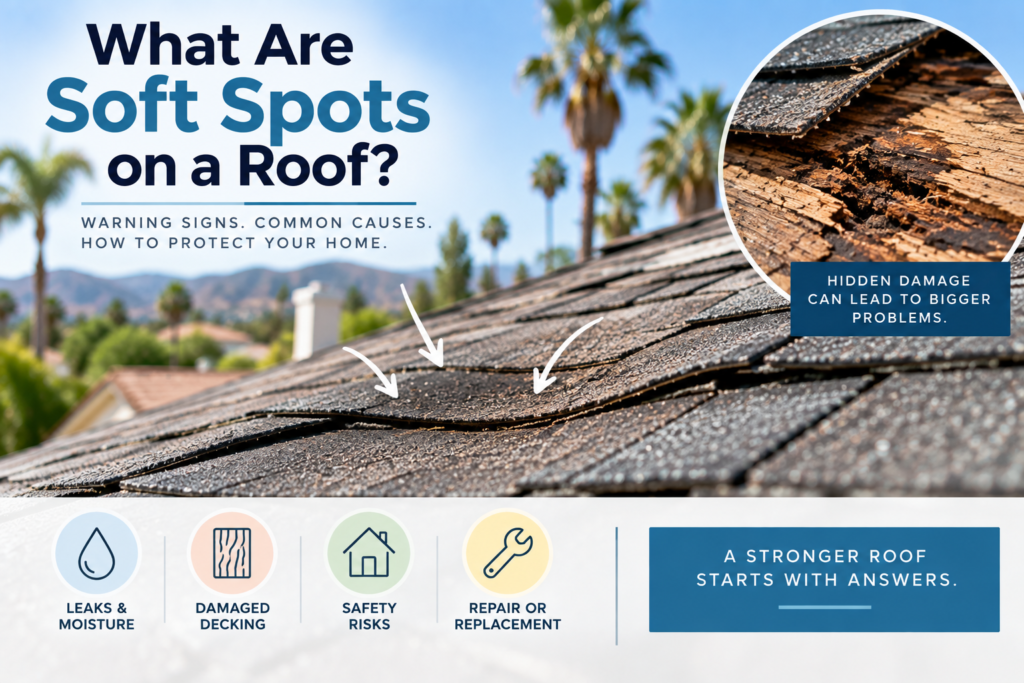
A roof should feel solid, stable, and properly supported. When a roof has a “soft spot,” it means an area of the roof may feel weak, spongy, sagging, or unstable beneath the surface. Soft spots are often a warning sign that the roof decking, underlayment, or surrounding materials may have been affected by moisture, age, heat, poor ventilation, or long-term leaks.
For homeowners in Van Nuys and the San Fernando Valley, soft spots can be especially concerning because roof damage may develop quietly during long dry periods. A roof can be weakened by heat, cracked materials, failing underlayment, old leaks, or damaged flashing before the next rain finally exposes the problem. By the time a roof feels soft or looks uneven, the damage may already involve more than the visible top layer.
Soft spots should never be ignored. They can affect the safety of the roof, the reliability of repairs, and the protection of the home underneath. If you suspect your roof has a weak or sagging area, Van Nuys Roof Repair can inspect the roof and determine whether the issue can be repaired or whether a larger solution may be needed.
What Does a Soft Spot on a Roof Mean?
A soft spot usually means the roof surface is no longer being fully supported underneath. The visible shingles, tiles, or roofing material may still be in place, but the decking beneath them may be weakened.
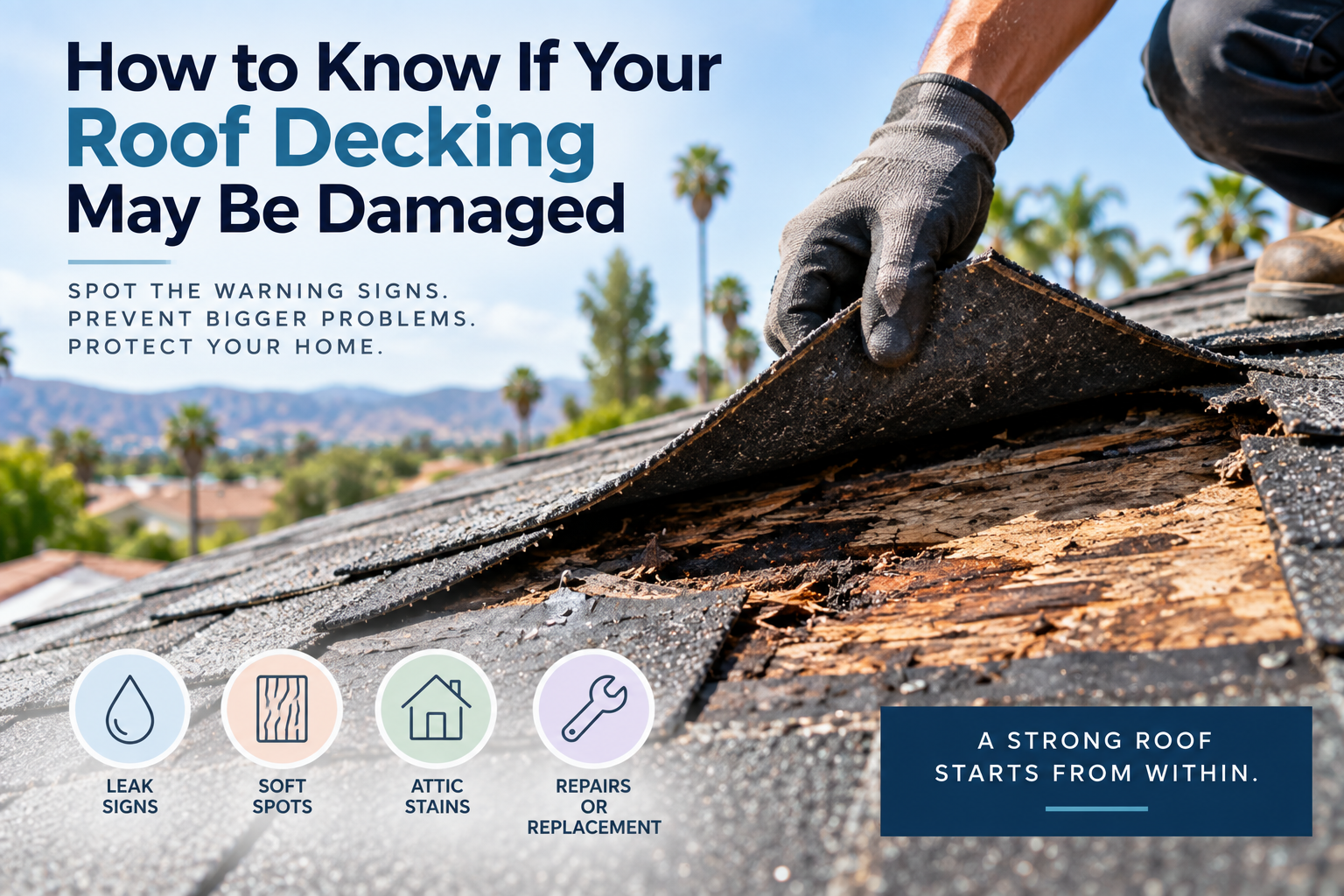
Roof decking is the structural layer attached to the roof framing. It gives the roofing materials a solid surface to sit on. When decking is damaged by water, rot, or long-term stress, it may lose strength. This can make the area feel soft, bouncy, or unstable if walked on.
Homeowners usually should not try to test this themselves by walking on the roof. If the roof is soft, walking on it can be dangerous and may cause more damage. A professional roofer can check the area safely.
Van Nuys Roof Repair’s article on how to know if your roof decking may be damaged explains why the layer beneath the visible roof surface matters so much.
What Causes Soft Spots?
The most common cause of soft spots is moisture. Water may enter through damaged shingles, cracked tiles, worn flashing, roof valleys, skylights, vents, flat roof seams, roof edges, or failing underlayment. Once moisture reaches the decking, the wood can soften, swell, rot, or weaken.
Soft spots can also develop after repeated leaks. A small leak may seem minor at first, but if water reaches the same area over and over, it can damage the decking beneath the surface. Over time, that area may become less stable.
Other causes can include poor attic ventilation, trapped heat, old roofing materials, incorrect installation, impact damage, or long-term roof neglect. In Van Nuys, intense sun and heat can dry out shingles and sealants, making it easier for small openings to form.
Van Nuys Roof Repair’s article on how to know if your roof needs repair after a heat wave explains how heat can worsen small roof weaknesses.
Soft Spots Can Be a Sign of Hidden Water Damage
One reason soft spots are serious is that they often point to hidden water damage. The top of the roof may not tell the full story. A few shingles may look slightly curled or cracked, but underneath, the decking may have absorbed moisture for months.
Water damage does not always show up immediately inside the home. Moisture may first affect the underlayment, then the decking, then insulation, then attic wood, and finally the ceiling. By the time you see a stain indoors, the roof system may already have multiple affected layers.
This is why even a small leak should be handled quickly. Van Nuys Roof Repair’s article on why small roof leaks can become expensive repairs explains how minor water entry can turn into larger damage if it is left alone.
Can You See Soft Spots From the Ground?
Sometimes, yes. You may not be able to feel a soft spot without walking on the roof, but you may see clues from the ground.
Look for areas that appear sagging, wavy, dipped, or uneven. A roofline should generally look straight and consistent. If one section looks lower than the rest, it may indicate weakened decking or structural movement.
You may also notice shingles that appear sunken, rippled, buckled, or uneven in one specific area. On tile roofs, you may see shifted or cracked tiles near a low spot. On flat or low-slope roofs, ponding water may point to a depressed section that is holding moisture.
Do not climb onto the roof to confirm. Use binoculars if needed, take photos from the ground, and schedule an inspection if something looks wrong.
Van Nuys Roof Repair’s article on how to spot roof damage from the ground is a helpful resource for checking roof warning signs safely.
Why Walking on a Soft Roof Is Dangerous
If a roof has soft spots, walking on it can be unsafe. The weakened area may not support weight properly. A person could damage the roof further, break through the surface, or create a larger opening.
Even if the roof does not collapse, stepping on a soft spot can crack shingles, break tiles, loosen underlayment, or worsen decking damage. This can turn a repairable issue into a more expensive problem.
Roofers are trained to identify unsafe areas and use proper safety precautions. Homeowners should not try to diagnose soft spots by stepping around the roof. If you think the roof may be soft, stay off it and call a professional.
Soft Spots Often Start With a Leak
Many soft spots begin with a leak that was not repaired quickly enough. The leak may have been small, intermittent, or hidden in the attic. It may have only appeared during heavy rain or wind-driven rain. It may have dried out between storms, making the problem seem less urgent.
In Van Nuys, leaks can be especially deceptive because long dry stretches may make homeowners forget about the issue. A leak that appeared once during rain may return months later when another storm arrives.
If the same area has leaked more than once, the decking beneath that area should be checked. Repeated leaks can weaken the roof from the inside out.
Van Nuys Roof Repair’s article on when a roof leak is considered an emergency explains when water intrusion should be handled immediately.
Underlayment Failure Can Lead to Soft Spots
Underlayment sits between the visible roofing material and the decking. It provides an extra layer of protection when water gets past shingles, tiles, or other roof coverings.
If underlayment fails, water can reach the decking more easily. Underlayment may fail because of age, heat, poor installation, exposure, tears, or repeated moisture. Once that secondary barrier is compromised, the decking underneath becomes more vulnerable.
A roof can look mostly intact from the outside while the underlayment is no longer doing its job. That is one reason a professional inspection may be needed when soft spots, leaks, or attic stains appear.
Van Nuys Roof Repair’s guide on warning signs your roof underlayment may be failing explains why underlayment problems should be taken seriously.
Attic Clues Can Point to Soft Roof Areas
The attic can reveal signs of roof decking damage before the problem becomes obvious from outside. If you can safely access your attic, look for dark stains on the underside of the roof deck, damp insulation, musty smells, rusted nails, water trails, or areas where the wood looks warped or discolored.
A soft spot above may correspond with stains or dampness below. If the attic shows repeated water marks, the roof may have been leaking for a while.
Be careful in the attic. Only step on proper walking surfaces, avoid electrical hazards, and do not touch wet insulation or wiring. If the attic is difficult to access or unsafe, wait for a professional.
Van Nuys Roof Repair’s article on can roof damage affect your attic explains how roof issues can show up inside attic spaces.
Ceiling Stains May Mean the Problem Has Spread
A soft spot on the roof may eventually lead to interior ceiling stains. If water passes through the roofing materials, underlayment, decking, attic insulation, and drywall, it may appear as a brown stain, bubbling paint, peeling texture, or damp area on the ceiling.
A ceiling stain does not always appear directly below the roof opening. Water can travel along rafters, decking, insulation, or pipes before it shows up inside. That means the actual roof damage may be several feet away from the stain.
Do not paint over the stain without fixing the source. If the decking is damaged, the problem may continue even if the interior looks better temporarily.
Van Nuys Roof Repair’s article on what to do when you notice a ceiling water stain explains what homeowners should do when interior signs appear.
Flat Roofs Can Develop Soft Areas Too
Soft spots are not limited to shingle or tile roofs. Flat and low-slope roofs can also develop soft or spongy areas, especially when water ponds, drains clog, seams open, or membranes crack.
Commercial roofs are especially vulnerable when foot traffic, HVAC equipment, roof penetrations, and drainage issues are involved. A soft area on a flat roof may mean moisture has entered the insulation or roof deck below the membrane.
Ponding water can make soft spots worse because it keeps moisture sitting in one area. If the roof is already weakened, water can continue to spread.
Van Nuys Roof Repair’s article on why your flat roof leaks explains common flat roof issues, while the commercial roofing in Van Nuys page is relevant for business owners and property managers.
Are Soft Spots Always a Sign You Need a New Roof?
Not always. A soft spot may be repairable if the damage is isolated, the roof is otherwise in good condition, and the source of moisture can be corrected. In that case, a roofer may remove the affected roofing materials, replace damaged decking, repair underlayment, and restore the roof surface.
However, if there are multiple soft spots, widespread leaks, old materials, failing underlayment, sagging areas, or repeated repairs, replacement may be more practical. A roof with widespread decking damage may not have a reliable foundation for patchwork repairs.
The right solution depends on the roof’s age, material, leak history, damage extent, and overall condition.
Van Nuys Roof Repair offers both roof repair in Van Nuys and roof replacement in Van Nuys, so the goal is to match the solution to the actual condition of the roof.
Why Soft Spots Should Be Repaired Before Listing a Home
If you are planning to sell your home, soft spots should be addressed before listing. Home inspectors may flag sagging, roof damage, attic stains, leaks, or visible roof concerns. Buyers may become nervous if the roof appears unstable or if there is evidence of moisture damage.
A roof problem can affect negotiations, delay closing, or cause buyers to request repairs or credits. Handling roof issues early can make the sale process smoother.
Van Nuys Roof Repair’s article on why roof repairs should be handled before listing a home for sale explains why roof condition matters before buyers start inspecting the property.
What a Roofer May Check
When inspecting a suspected soft spot, a roofer may evaluate the visible roof surface, shingles or tiles, flashing, vents, valleys, underlayment clues, roof slope, drainage, attic stains, ceiling signs, and roof decking condition.
They may look for moisture entry points, signs of old or recent damage, sagging areas, and whether the problem is localized or widespread. If the roof is being replaced, damaged decking may be confirmed once the old roofing materials are removed.
Van Nuys Roof Repair’s article on how to tell if roof damage is old or recent can help homeowners understand why damage timing matters during an inspection.
When to Schedule an Inspection
You should schedule an inspection if you notice sagging roof areas, recurring leaks, ceiling stains, attic stains, musty odors, lifted shingles, cracked tiles, exposed underlayment, ponding water, or visible dips in the roofline.
You should also call if another contractor, inspector, or roofer mentioned soft spots. Even if you cannot see the problem yourself, a soft area should be evaluated before it worsens.
Waiting can allow moisture to spread and may increase repair costs. If soft decking is caught early, the repair may be more limited.
Final Thoughts
Soft spots on a roof are areas that may be weakened, unstable, or damaged beneath the visible surface. They are often caused by moisture, leaks, underlayment failure, poor ventilation, heat damage, aging materials, or repeated roof problems.
A soft spot can affect roof safety, repair reliability, and the protection of the home underneath. Warning signs may include sagging, uneven roof sections, recurring leaks, attic stains, ceiling stains, ponding water, or roof materials that look sunken or warped.
If you suspect your roof has a soft spot, stay off the roof and schedule an inspection with Van Nuys Roof Repair. A professional can determine whether the damage is isolated, whether decking repair is needed, and whether roof repair or replacement is the best long-term solution.